Wooden Kitchenware Damages the Environment Far Less Than Plastic
It is not just a feel-good claim. From how it is made to where it ends up, wood leaves a much smaller mark on the planet than plastic ever will.

Most of us do not think twice about the environmental cost of a plastic spatula or a melamine tray. It is small, it is cheap, and it works. But that convenience hides a much bigger problem. Plastic kitchenware is made from fossil fuels, lives forever in landfills, and slowly breaks into toxic microplastics. Wood, by contrast, is renewable, biodegradable, and far gentler on the environment at every stage.
Here is exactly why that matters — and why switching to wood is one of the simplest ways to reduce your kitchen’s environmental footprint.
1. Plastic Starts With Oil. Wood Starts With a Tree.
Every piece of plastic kitchenware begins its life in an oil refinery or a natural gas plant. The extraction, refining, and manufacturing process is energy-heavy and carbon-intensive. According to the Center for International Environmental Law (CIEL), plastic production alone accounts for roughly 3.4% of global greenhouse gas emissions — and that number is rising as plastic use grows.
of global greenhouse gas emissions come from plastic production alone — before the product is even used.
Wood, on the other hand, is a crop. A sheesham tree grows for 20 to 30 years, absorbing carbon dioxide from the atmosphere the entire time. When that wood is harvested and turned into a tray or a bowl, the carbon stays locked inside the material. Even after the tree is cut, a new one can be planted in its place. The cycle continues.
Plastic has no such cycle. Once the oil is pulled from the ground and turned into a spoon, that carbon is released into the atmosphere — either during manufacturing or when the spoon is eventually burned or landfilled.

Sustainable forestry replants what it harvests. Oil wells do not.
2. Plastic Lives for Centuries. Wood Returns to the Soil.
This is the most obvious difference, but it is worth repeating because the numbers are staggering.
A plastic spoon or cutting board can take 400 to 1,000 years to break down — and even then, it does not truly disappear. It fragments into microplastics: tiny particles that contaminate soil, water, and even the food chain. A 2019 study by the World Wildlife Fund (WWF) estimated that the average person ingests about 5 grams of microplastics per week — roughly the weight of a credit card.
A wooden spoon, tray, or bowl does none of this. Left in natural conditions, untreated wood decomposes within 1 to 5 years depending on the climate. It enriches the soil instead of poisoning it. Even if it ends up in a landfill (where decomposition is slower due to lack of oxygen), it still breaks down far faster than plastic and does not leave behind persistent toxic chemicals.
3. Manufacturing Wood Uses Far Less Energy
Turning a log into a bowl requires cutting, drying, and shaping. Turning oil into a plastic bowl requires drilling, refining, chemical polymerization, molding, and cooling. The energy gap is massive.
Research published in the Journal of Cleaner Production consistently shows that wood products have a significantly lower embodied energy — the total energy required to produce them — than their plastic equivalents. In many cases, producing a wooden kitchen item uses less than half the energy of producing the same item in plastic.
- Wood processing is mostly mechanical: cutting, carving, sanding, finishing.
- Plastic processing is chemical: heating petroleum derivatives to high temperatures, adding stabilizers and colorants, and injecting into molds.
- Wood workshops run on basic tools. Plastic factories run on industrial furnaces and complex supply chains.
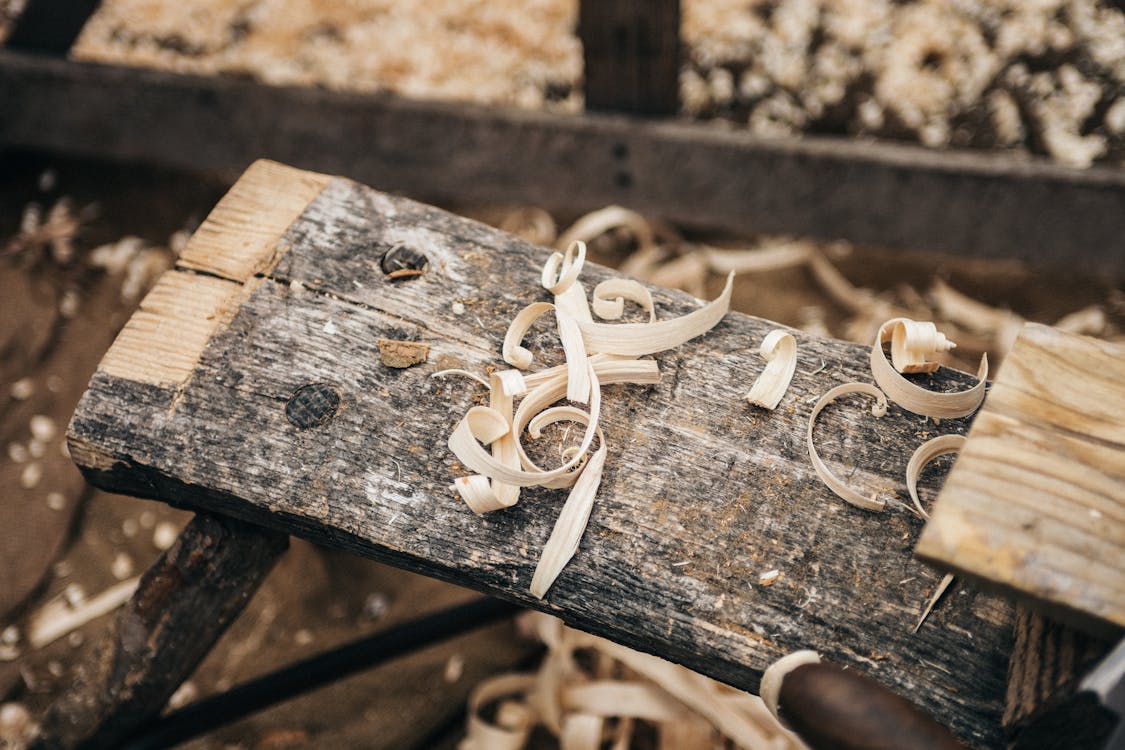
Woodcraft relies on mechanical skill and simple tools — not industrial chemical plants.
4. End of Life: One Becomes Compost, the Other Becomes Pollution
When a plastic cutting board cracks, your only real option is the trash bin. Municipal recycling systems rarely accept kitchen plastics because they are contaminated with food residue and made from mixed polymers. So they go to landfill — or worse, they are dumped openly.
In Pakistan, where waste management infrastructure is still developing, plastic kitchenware often ends up in open dumps, drains, or eventually the ocean. Once there, it photodegrades into smaller pieces but never truly vanishes.
Wood does not create this problem. A broken wooden tray can be:
- Repaired — sanded and refinished
- Repurposed — cut into smaller items or used as kindling
- Composted — broken down naturally in soil
Even burned for fuel, wood releases only the carbon it absorbed during growth — a neutral cycle. Burning plastic releases dioxins, furans, and other toxic compounds.
5. The Hidden Cost of “Cheap” Plastic
Plastic kitchenware is cheap because its true cost is hidden. You do not pay for the oil extraction, the refinery emissions, the ocean cleanup, or the microplastics in your drinking water. Those costs are passed to the environment — and eventually to public health.
Wood costs more upfront because you are paying the actual cost of a real material, shaped by real hands, using finishes that do not harm you or the planet. Over time, a well-made wooden tray or bowl outlasts several plastic replacements, making it the more economical choice too.
years — the minimum time most plastic kitchen items will sit in a landfill before they even begin to break down.
What This Means for Your Kitchen
You do not need to throw out every plastic item today. But the next time you need a new tray, a spoon, or a serving bowl, choosing wood is a small decision with a real environmental payoff.
At WoodPalace, we finish our food-contact items with food-grade mineral oil and beeswax — no toxic lacquers, no synthetic varnishes. You get a product that is safe for your family and far kinder to the environment than anything made in a plastic factory.
The difference is not marketing. It is material science, lifecycle analysis, and common sense.
Ready to Make the Switch?
Browse our hand-finished sheesham trays, bowls, and kitchenware — delivered across Pakistan with cash on delivery.
Shop Food-Safe Wood Items